
In the fast-evolving world of personal development and business growth, “coaching” and “mentoring” have become popular buzzwords. Entrepreneurs, aspiring business owners, and industry builders alike are tapping into them as both clients and providers.
Despite their growing relevance, many still confuse the two and this confusion can cost money.
Understanding the clear differences between coaching and mentoring is more than just semantics. It’s a vital key to positioning your services, attracting the right clients, and unlocking new streams of income. Let’s dive in.
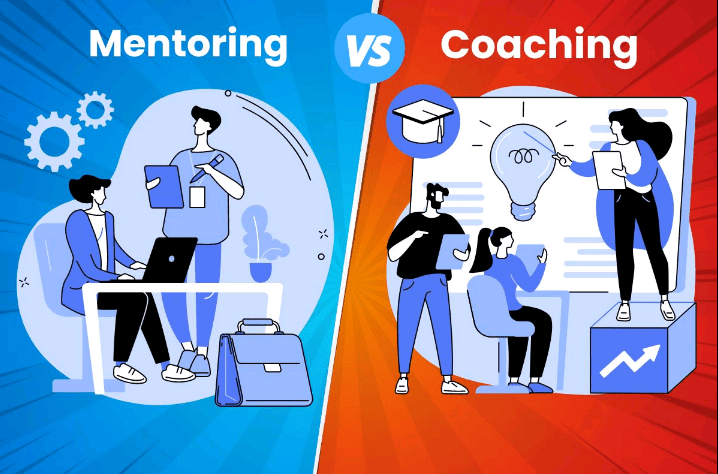
• COACHING VS. MENTORING: WHAT’S THE DIFFERENCE?
1. Purpose and Focus
Coaching is designed to help clients achieve specific, measurable goals within a defined period. It’s performance-based and often centered around solving a problem or building a skill.
Mentoring, on the other hand, is more about long-term development. It’s relational, supportive, and focused on sharing wisdom, experience, and guidance.
2. Structure and Format
Coaching is usually formal, structured, and time-bound. Sessions are planned, progress is tracked, and goals are clearly defined.
Mentoring is often informal and open-ended. Conversations flow organically, and growth happens more gradually.
3. Expertise and Role
Coaches may not have direct experience in the client’s field — instead, they use tested frameworks, accountability techniques, and questioning strategies to drive progress.
Mentors are typically industry veterans who guide others based on their lived experiences and personal journeys.
4. Timeframe
Coaching relationships are usually short to medium term (e.g., 3–12 months).
Mentoring relationships may last for years, often evolving into friendships or professional alliances.
5. Compensation
Coaching is a paid, professional service — it’s a business.
Mentoring is usually unpaid, or part of a broader program or community. Some mentors may monetise their mentorship through group programs, speaking, or books — but the dynamic is different.

• WHY THIS DISTINCTION MATTERS FOR MONETISATION
If you’re looking to build income through coaching or mentoring, knowing the difference is essential. Here’s why:
1. Clarity Helps You Define Your Offer
When you don’t know whether you’re offering coaching or mentoring, your messaging becomes unclear. Clients won’t know what they’re paying for — and confusion repels commitment. Clarity helps you structure your services and communicate their value.
2. Pricing and Positioning Depend on Your Role
Coaches can charge premium rates because clients expect tangible outcomes. Mentors, however, are more subtle in their monetisation — they build influence and credibility, which they can leverage into book deals, consulting gigs, or leadership roles.
3. You Can Attract the Right Clients
Knowing your role helps you attract people who are aligned with your methods. Some people want results-driven coaching; others crave long-term wisdom and guidance. You can’t serve both with the same strategy.
4. Packaging Your Services for Sales
If you’re a coach, you can build packages: 1-on-1 sessions, workshops, group coaching, digital products. If you’re a mentor, your income model might lean toward brand building, partnerships, or becoming a paid advisor.
• MONETISATION MODELS- HOW COACHES AND MENTORS MAKE MONEY
Let’s break down how both coaches and mentors typically earn — because both paths can be profitable if you understand how to structure them.

• COMMON MONETISATION PATHS FOR COACHES
✅ One-on-one coaching packages (e.g. 6 or 12 weeks)
✅ Group coaching programs
✅ Online courses and digital training
✅ Accountability programs or memberships
✅ VIP intensives or strategy days
✅ Corporate coaching contracts
These are results-focused offerings, and clients pay for clarity, speed, and transformation.
• COMMON MONETISATION PATHS FOR MENTORS
✅ Paid speaking engagements
✅ Writing books or creating podcasts
✅ Group mentoring communities
✅ Consulting and strategic advisory roles
✅ Brand partnerships or ambassador deals
✅ Mentorship built into online communities
Here, the authority and relationship built over time becomes a valuable asset that opens doors for indirect income.
• WHICH ONE ARE YOU? (A QUICK SELF-CHECK)
If you’re not sure how to position yourself yet, this short reflection can help:
> 💡 Do you love helping people get specific results in a short time — like increasing their sales, productivity, or visibility?
➤ You might be a coach.
> 💡 Do people come to you for life advice, career guidance, or how to navigate big-picture decisions?
➤ You’re likely a mentor.
> 💡 Do you do both — help people get results and share personal guidance?
➤ You’re both, but be careful: don’t blend the roles in one offer. Instead, separate your positioning. Have one coaching package and a separate mentorship platform (or community).
Knowing this helps you communicate clearly and confidently — and people pay more for clarity.
• REAL-LIFE SCENARIOS: MONETISATION IN ACTION
CASE 1: SARAH THE SALES COACH
Sarah helps small business owners close more sales in 90 days. Her services are structured into a 12-week coaching program with clear deliverables. She charges $1,200 per client. Coaching works here — the results are tangible.
CASE 2: TUNDE THE BRANDING MENTOR
Tunde is a creative director with 15 years of experience. He guides young designers through their career journeys via free mentoring. Over time, he built authority, wrote a book, and now gets paid speaking gigs and consulting jobs. His monetisation came from influence, not sessions.
• CHOOSE AND MONETISE INTENTIONALLY
You don’t have to choose between being a coach or a mentor forever — but you do need to understand which hat you’re wearing at any given time.
Clarity in your identity and offer helps you:
•Serve your audience better
•Package your services for profit
•Build a sustainable and scalable income stream
Whether you’re helping clients reach short-term goals or guiding them through long-term growth, recognising the difference between coaching and mentoring could be the secret to turning your knowledge into consistent cash flow.
👉 What’s Next?
Now that you know what you are — a coach, a mentor, or both — the next big step is choosing the right niche.
Because knowing what you do is one thing, but knowing who you serve profitably is where the money is.
Don’t forget to reach out for assistance, questions or consultations if need be; https://linktr.ee/salesandproductionnetwork2 . We’d love to hear from you, see you in the next one!
➡️ Watch out for the next article:
“How to Choose Your Coaching/Mentoring Niche for Profitability.”
 Site Title