
The world of work is already evolving so rapidly, technology has broken down barriers between countries and industries.
Today, an entrepreneur in Lagos can serve clients in Dubai, while a professional in Ibadan can collaborate with a U.S. company, all without stepping out of their home. This is the reality of remote jobs, and it’s one of the most powerful shifts shaping modern business.
Why then should entrepreneurs, professionals, and skill-builders care about remote jobs? It’s simply because remote work creates freedom, scalability, and opportunity.
From freedom to work from anywhere and connect with global markets, to scalability that grows beyond physical boundaries, opportunities to monetize skills and services to a worldwide audience.
A remote work isn’t just a convenient trend, it’s a tool to multiply productivity, income, and impact.
HOW TO LEARN THE SKILLS FOR REMOTE JOBS

Remote work is built on value creation. Before you can land clients or roles, you must learn skills that solve problems. How then do
Identify the skills in demand
Writing, copywriting, design, programming, sales, customer support, consulting, marketing, and virtual assistance are popular. Ask yourself, “what can I offer that businesses truly need?”
A young marketer in Lagos can learn email copywriting online and then write for e-commerce businesses in the U.S., earning in dollars.
Take online courses and trainings
Platforms like Coursera, Udemy, Skillshare, and LinkedIn Learning are rich with resources. Some even offer free certificates as well.
Please take note not to watch the videos, without practicing each lesson. Practice each lesson as if it’s for a real client.
Practice and build a portfolio
Learning means little without proof. So start small; volunteer, take on trial projects, or create your own mock projects. Package them into a portfolio (even a simple Google Drive or personal blog works).
WHERE TO FIND REMOTE JOBS

Once you’ve built a skill foundation, the next step is finding opportunities. The internet is filled with platforms where companies and clients look for remote talent:
•Upwork & Fiverr – Top freelancing platforms for creative and technical work.
•LinkedIn – A professional network where remote opportunities are posted daily.
•Remote.co & We Work Remotely – Job boards dedicated exclusively to remote roles.
•Indeed & Glassdoor – Traditional job sites with filters for remote jobs.
Don’t only rely on job boards, you have to learn how to pitch your services directly to businesses. Many entrepreneurs find success through outreach and networking.
THE EASE OF REMOTE WORK
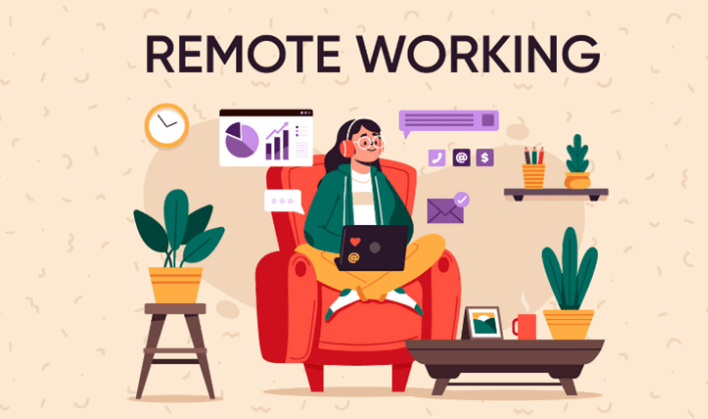
A common misconception is that remote jobs are usually complicated. In truth, they often make life easier:
•No commuting stress or traffic.
•Lower costs (no daily transport or office expenses).
•More focus on results instead of rigid routines.
Yes, discipline is required to manage distractions, but once you build a routine, you’ll see remote work is not just achievable, it’s enjoyable and highly profitable.
CREATING YOUR OWN SCHEDULE

Remote jobs give you the freedom to design your day. Unlike the traditional 9–5, you can work at your peak hours and structure your workflow around your priorities.
•Morning person? Handle major projects before noon.
•Night owl? Do deep work at night while managing lighter tasks in the day.
Balance is key, it’s best not to replace commuting stress with burnout.
Remote work is not a distant dream, it’s already shaping the way we sell, produce, and grow. The call to action is clear: learn remote skills, apply them globally, and position yourself for growth.
The future of work is borderless. The earlier you start learning, the sooner you’ll start earning. So, ask yourself today, “why not you? Why not now?”
At SALES AND PRODUCTION NETWORK, we’re committed to ensuring that our members are hitting their goals and accomplishing new feats, we’d love to be an integral part of your story, join us, https://linktr.ee/salesandproductionnetwork2.
 Site Title